

 mollyzwinters
 Recently, I was thinking about what helps professional organizers get consistent organizing clients. Then I remembered that a while back, I surveyed professional organizers about what brought them to download my free marketing plan. One response stood out to me:
“My clients love the work I do for them, but getting them is so random. I need help.”
Random.
That word — random — is the opposite of what you want in business, isn’t it?
You want predictable. Consistent. Sustainable. (Especially if you’re an organizer, right?)
Instead, here’s what happens: You spend three hours creating Reels because that’s what everyone says you’re supposed to do. You post five times a week on Instagram. You’re in seventeen Facebook groups trying to “network.” You’re exhausted, you’re not booking clients, and the thought of opening Instagram makes you want to throw your phone in a lake.
Another organizer told me: “I just don’t have time to do it all!”
And another: “I’ve gotten busier with clients and am not staying consistent with my marketing”
Sound familiar? You’re not alone.
Consistent marketing doesn’t mean constant posting. It means showing up strategically in ways that actually bring in clients — without requiring you to become a content creation machine.
Let’s talk about seven ways to get consistent organizing clients that don’t involve dancing on TikTok or living on your phone.
1. Stay in Touch with Past Organizing Clients
Your past organizing clients already know, like, and trust you — the trifecta of marketing. Once they’ve experienced your work firsthand, they’re your warmest leads for repeat business and referrals.
Here’s what you can do:
- Set up quarterly check-ins. Create a simple system that reminds you to email or text every 3 months. (CRMs are great for this, but if you don’t use one, then just start the old-fashioned way. No need to wait until you have a perfect software automation machine!)
Examples:
- “Hi Sarah! Just checking in—how’s the kitchen holding up?”
- Offer a quick reminder about something seasonal
- Share relevant content — forward articles they’d find helpful
- Send a photo of an organizing product you think they’d love
- Share a quick seasonal tip relevant to the areas you organized
- Directly, confidently, ask if they’re ready for more help
This is NOT your monthly newsletter — this is a direct 1:1 communication from you, to them.
The best part? You can spend 15-20 minutes a week, and past clients convert at a much higher rate than cold leads.
Where to Start: Block 30 minutes on your calendar right now. Make a list of your past clients and schedule a check-in message to each one over the next month. Done. ✔
2. Create One Strategic Business Partnership Per Quarter
Not all referral sources are created equal. Instead of trying to network with everyone, focus on building deep relationships with a handful of strategic partners.
Who makes a great referral partner for professional organizers?
- Real Estate Agents: They work with people moving, downsizing, or staging homes
- Interior designers: Their clients often need organizing before or after a design project
- Estate Sale Companies: They see families overwhelmed by decades of stuff
- Senior Move Managers: Natural overlap with your services
- Therapists or ADHD Coaches: Clients who need practical organizing support
- Home Stagers: They need spaces cleared before they can stage
- Estate lawyers: They work with families and individuals managing significant life transitions and assets, who often need the support of a kind person like you!

Here’s what you can do:
Pick ONE type of partner per quarter. That’s only four partnerships to build all year.
Reach out personally. Ask to meet for coffee or hop on a quick call. Ask about their business and how you can support them. Explain how you can help their clients. Create a simple referral arrangement (commission, reciprocal referrals, or just goodwill).
One good referral partner can send you 5-10 organizing clients per year. Four strong partnerships? That’s 20-40 clients from referrals alone.
You’re not spending time creating content — you’re having real conversations and making genuine connections with people who work with your ideal clients every single day.
Where to Start: Choose one type of referral partner to focus on this quarter. Identify 3-5 specific people to reach out to. Send the first message this week.
3. Create Content That Works For You
If the thought of planning a month (or more!) of content makes you break out in hives, I’ve got good news—there’s another way!
Let’s talk about content strategy that’s actually sustainable — which means focusing on the stuff that compounds over time, not just the stuff that disappears in 24 hours.
Start with blogging (yes, really).
I know, I know. Blogging sounds so 2010. But here’s the thing — blog posts are the gift that keeps on giving because they’re great for SEO (search engine optimization).
When you post on social media, it’s gone in a day or two. When you write a blog post, it lives on your website forever. It shows up in Google searches. It positions you as an expert. It gives people something to share.
Plus, one blog post can be repurposed into weeks of social media content AND email newsletters. (More on that in a second.)
What to blog about:
Do some keyword research to make sure you’re targeting what your ideal organizing clients are searching for, and then consider these common topics.
- Questions your organizing clients ask you all the time
- Seasonal organizing tips (spring decluttering, holiday prep, back-to-school organization)
- Before/after case studies (with permission)
- Behind-the-scenes of your process
- Solutions to specific organizing challenges
Aim for one blog post per month if you’re just starting. That’s 12 posts a year showing up in Google searches for “how to organize [specific thing].”
Then batch your social media weekly:
Pick one day per week as your “content planning day.” Plan 1-5 posts for the upcoming week. That’s it. Not 30. Not 50. Just the next seven days. (And if you’re currently posting ZERO times per week, start with ONE. Baby steps!)
Here’s the magic: If you wrote a blog post this month, pull quotes, tips, and ideas from it for your social posts. One blog post = 4-6 social media posts. Boom. Content batched.
Use simple content formulas:
- Monday: Quick organizing tip
- Wednesday: Before/after or client win story
- Friday: Behind-the-scenes of your week
Keep a running list on your phone of content ideas as they come to you throughout the week. Then when it’s time to batch, you’re not staring at a blank screen.
The content ecosystem:
Here’s how this all works together:
- Write one blog post per month (showcases expertise, helps SEO)
- Pull content from that blog for social media posts
- Send one email per month (we’ll cover this next) that links to your blog post
- Everything feeds into everything else
You’re not creating three separate content strategies. You’re creating ONE piece of substantial content and repurposing it across channels.
The key? Keep it simple and sustainable. You’re not trying to be an influencer — you’re building a body of work that positions you as the go-to organizer in your area.
Where to start: Write one blog post this month. It doesn’t have to be perfect. Just get it done. Then pull 3-5 social media posts from it for the next few weeks. Keep it simple!
4. Optimize Your Google Business Profile
This is hands-down one of the best investments of your time for local lead generation, and a ton of professional organizers completely ignore it.
Your Google Business Profile plays a huge role in whether local clients find you — especially when they search for services like professional organizer [your city] or home organizer in [your city]. A few strategic updates can make a big difference.

Here’s what you can do:
If you haven’t already, set up or claim your Professional Organizer Google Business Profile.
- Go to google.com/business
- Claim or create your listing
- Fill out EVERY section completely (more details below)
- Upload quality photos (your headshot, before/after photos (with client permission, of course!), your workspace or organizing supplies, action shots of you working (face blurred if organizing clients are present)
- Watch my video to see these steps in action!
If you already have a Google Business Profile, be sure to update these key areas:
- Accurate business details
Keep your business hours, contact info, and availability up to date so Google (and potential organizing clients) know when and how to reach you. - Location-based business description
Write a clear description that naturally includes what you do and where you work, such as professional organizer in [City] or home organizing services in [City, State]. - Complete service listings
List every service you offer — organizing, decluttering, packing, unpacking, downsizing, and virtual organizing — with short, specific descriptions. - Defined service areas
Add nearby cities, towns, or neighborhoods you serve to increase visibility in local searches beyond your immediate location. Use the terms locals would add to their searches. - High-quality, appealing photos
Upload clear photos of your work, before-and-afters, and yourself. Use descriptive file names so Google understands what the images show.
Instead of image file names like these “IMG_4829.jpg” or “beforeafter1.png” use something like, “professional-organizer-kitchen-decluttering-bend-oregon.jpg” or “home-organizing-pantry-before-and-after-portland-or.jpg”
- Relevant business attributes
Select attributes like woman-owned, veteran-owned, LGBTQ+ friendly, or online appointments available to stand out in local search results and connect with the right organizing clients.
Post weekly updates:
- Takes 10 minutes. Keep it simple!
- Share a quick tip, a seasonal reminder, a client win, or a recent blog post!
- Google rewards businesses that post regularly with better visibility
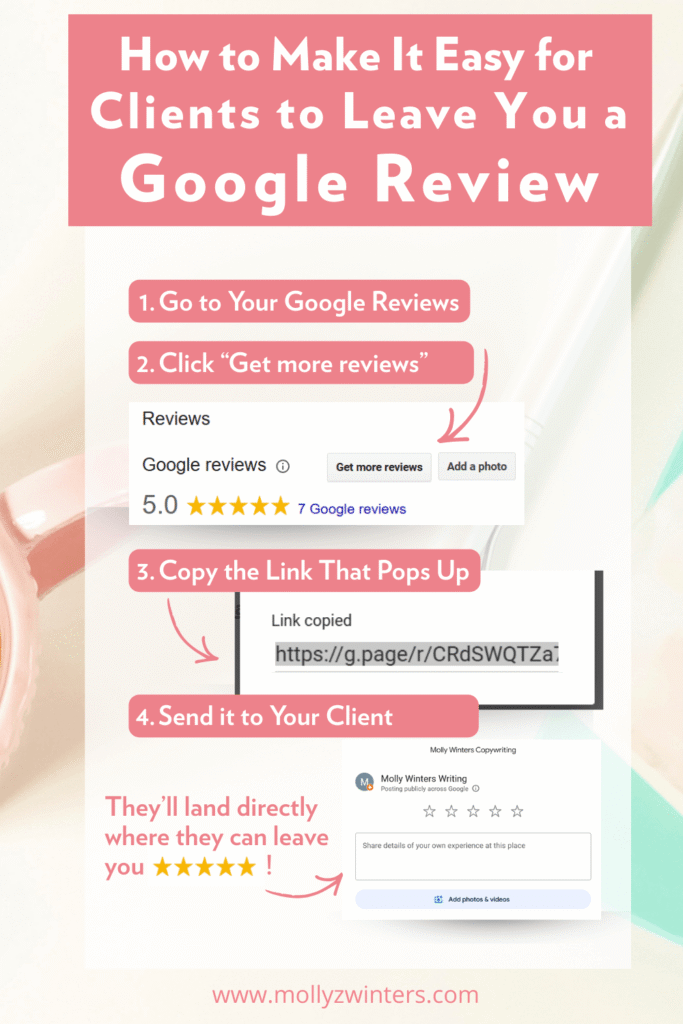
Ask for reviews:
- After every successful project, ask satisfied your organizing clients to leave a Google review
- Make it easy: send them a direct link
Answer questions:
- Check your profile once a week
- Respond to any questions or messages promptly
- Engagement signals to Google that you’re active
Why this works: People searching for organizers on Google are HIGH QUALITY leads. They’re not just scrolling—they’re actively looking to hire someone. These searches convert way better than social media.
Where to Start: Spend one hour this week optimizing your Google Business Profile. Then set a weekly 5-minute reminder to post an update
5. Send One Email Per Month to Your List
I know what you’re thinking: “I don’t even have an email list” or “I’m not ready for email sequences.”
Good news—you don’t need fancy automation or complicated funnels. You just need to send one helpful email per month to the people who’ve shown interest in your services.
Here’s why email matters:
Social media algorithms are unpredictable. Your posts might be seen by 5% of your followers, or by no one at all.
Email? It lands directly in their inbox. No algorithm. No wishing and hoping they happen to see it.
PLUS, you own your email list — not social media.
What to send:
You’re not selling. You’re staying helpful and visible. Here are some simple email ideas:
- Seasonal organizing tip: “3 ways to declutter before spring cleaning.”
- Client success story: “How Sarah finally got her garage back.”
- Behind-the-scenes: “What I learned from my toughest organizing project.”
- Quick reminder: “Spring is moving season—time to prep your space.”
- Resource roundup: “My favorite organizing products this month.”
How to build your list:
- Add a signup form to your website
- Mention it in your social media bio
- Offer a simple lead magnet (checklist, guide, or free resource)
- Ask clients at the end of a project if they’d like organizing tips
- Add it to your contract and automatically add your organizing clients to your list
You don’t need thousands of subscribers. Even 100 people who actually want to hear from you are powerful.
An important note:
Permission-based email marketing is hugely important these days. Be sure you have permission before adding subscribers. (This is an entire blog post topic in itself, so we’ll come back to it.)
Where to Start: If you don’t have a list yet, set one up this week (Kit, Mailchimp, and Flodesk all have free options). If you already have a list, schedule one email to send within the next 7 days.
6. Talk to Real People About Your Business (Yes, EVERYONE)
While working on the website copy for a veteran professional organizer recently, she told me, “I close 90% of the phone consultations I get.”
And I hear this all the time from experienced organizers.
Your best organizing clients will come from conversations, not posts.
Digital content is important for marketing, but it simply sparks a conversation.
Let me paint a picture.
You’re getting your hair cut. Your stylist asks what you’ve been up to. Instead of saying “Oh, you know, just work,” you say: “Actually, I’m a professional organizer. I just helped a client declutter and organize their garage, and now they can finally park their car in it for the first time in five years!”
Or you’re at your kid’s soccer game chatting with another parent. They mention feeling overwhelmed. You say: “Oh, I totally get that. I’m actually a professional organizer—helping overwhelmed families create systems is literally what I do. If you ever want to chat about it, let me know!”
Why organizers avoid this:
“I don’t want to be pushy.”
“I don’t want to seem like I’m always selling.”
“What if they think I’m judging them?”
Here’s the reframe:
You’re not being pushy. You’re offering a solution to a problem that MOST people struggle with.
Think about it: Do you feel annoyed when someone mentions they’re a physical therapist and you’ve been dealing with back pain? Or when you meet a plumber at a backyard BBQ, and your kitchen sink has been leaking?
No! Of course not. You think, “Oh, thank god, I need one of those!”
That’s how people feel about professional organizers. Everyone is drowning in stuff. Everyone feels overwhelmed. Everyone wishes they were more organized.
When you mention your business, you’re not imposing—you’re opening a door.
Here are some examples of how to do it naturally.
Bring it up in casual conversation:
- “What do you do?” → “I’m a professional organizer. I help [specific type of person] with [specific problem].”
- Someone mentions being stressed/overwhelmed → “That sounds tough. I’m actually an organizer—I work with people feeling exactly like that, and I know how overwhelming it feels.”

Don’t apologize or minimize:
❌ “I’m just a professional organizer…”
✅ “I’m a professional organizer. I help busy families create systems so mornings aren’t so chaotic.”
Have a simple way to describe what you do:
Focus on the transformation, not the tasks
❌ “I organize closets and garages.”
✅ “I help overwhelmed parents reclaim their homes so they can stop searching for their keys every morning.”
Make it easy to follow up:
- “Here’s my card—feel free to reach out if you ever want to chat.”
- “I’m on Instagram at [handle] if you want to see some before/afters.”
- “I’d love to send you some tips—can I grab your email?”
The best part? You’re already talking to these people anyway. You’re just mentioning what you do instead of keeping it a secret.
Where to Start: This week, mention your business to five people. Your dentist. The person in line at the coffee shop. Your neighbor. The parent at school pickup. Practice saying “I’m a professional organizer” without apologizing or downplaying it.
7. Track & Double Down on What’s Already Working
Most organizers have NO IDEA which marketing activities actually bring in their organizing clients.
They’re posting on Instagram because they think they should. They’re in 12 Facebook groups because someone told them to network. They’re trying Thumbtack because other organizers do.
But they don’t know what’s working.
One organizer shared: “I struggle to figure out the marketing part of things without spending a small fortune.”
The problem isn’t spending too much—it’s spending without knowing what’s bringing results.
Here’s what to do:
Ask every single client: “How did you hear about me?”
Write it down. Track it. Create a simple spreadsheet if you want, or just keep a running list.
After 10 clients, look at the data:
- Did 6 of them come from referrals?
- Did 3 find you on Google?
- Did 1 see your Facebook post?
Now do MORE of what’s working.
If most organizing clients are coming from referrals, double down on relationship marketing. Ask for more referrals. Stay in touch with past clients. Build strategic partnerships.
If they’re finding you on Google, invest more time in your Google Business Profile and local SEO. Get more reviews. Post weekly updates. Add blogs with relevant search terms to your website.
If they’re coming from Instagram, great—but make sure you’re not wasting time on 4 other platforms that bring in nobody.
The trap? Spreading yourself thin trying to do ALL the marketing tactics, burning out before any of them can really work.
Instead, focus on the 1-2 channels that are already showing promise and do them REALLY well.
Where to Start: Go through your client list right now. Write down how each person found you. Look for patterns. Choose the top 1-2 sources and commit to doubling your effort there.
How These 7 Strategies Work Together to Get More Organizing Clients
Notice something? None of these requires you to be constantly online.
Here’s how they compound:
You stay in touch with past clients → they refer you to a friend → that friend found you on Google (hey, you’re optimized!) → they join your email list → you stay top of mind → meanwhile, you mentioned your business to your hairdresser → she refers her sister → you track it all and realize referrals are your #1 source → you focus on building more strategic partnerships.
See how it works? Each strategy supports the others.
You’re not on social media for 3 hours a day. You’re building a sustainable marketing system that brings in steady clients without burning you out.
The difference between random and consistent:
❌ Random: Posting whenever you remember, hoping something sticks.
✅ Consistent: Focusing on 2-3 proven strategies and doing them well.
❌ Random: Trying every marketing tactic you hear about.
✅ Consistent: Tracking what works and doubling down.
❌ Random: Marketing only when you’re desperate for clients.
✅ Consistent: Nurturing relationships even when you’re booked.
Your Next Step: Put It All Into a Plan
I know what you might be thinking: “Okay, these all sound great, but HOW do I actually organize all of this? Which one do I start with? How do I track it? How do I make sure I’m being consistent?”
This is exactly why I created the Customizable Marketing Plan for Professional Organizers.
It’s a free Google Sheets template that helps you:
✅ Choose which marketing channels to focus on (so you’re not overwhelmed trying to do everything)
✅ Create your monthly content schedule (with a visual calendar so you know exactly what to post and when)
✅ Track what’s actually working (with a simple system to measure results from each channel)
✅ Plan your relationship marketing (weekly goals for reaching out to real people)
✅ Access 50+ content ideas specifically for professional organizers
It’s designed for organizers who love a good spreadsheet (we all do, right?) and need structure to stay consistent.
Because here’s the thing: these seven strategies work. But only if you make a plan and actually DO them consistently.
The template gives you a framework to take these ideas from “that sounds nice” to “this is what I’m doing this week.”
→ Download your free Customizable Marketing Plan for Professional Organizers here.
What Professional Organizers Are Saying
“I need to FOCUS on marketing to be more consistent, visible, and have an actual marketing strategy to work through.”
“I hate planning content but I love a spreadsheet and schedule, hoping this will help me enjoy planning content!”
“I’ve expanded my team and need to make sure to keep them busy!”
If any of these sound like you, these strategies—organized in a plan you can actually follow—will help you go from sporadic to strategic.
The Bottom Line
You don’t need to live on social media to get consistent organizing clients.
You need to:
- Stay connected with people who already know you
- Build strategic relationships that bring referrals
- Show up consistently (but simply) with helpful content
- Make it easy for people to find you on Google
- Stay in their inbox at least once a month
- Talk about your business in everyday conversations
- Track what works and do more of it

These aren’t flashy tactics. They won’t go viral. But they WILL bring you steady organizing clients without burning you out.
Start with one strategy this week. Add another one next. Build slowly.
Marketing doesn’t have to be overwhelming. It just has to be consistent.
Ready to organize your marketing like you organize your clients’ homes?
→ Get your free Customizable Marketing Plan for Professional Organizers here.
And once you download it, follow along with my blog post workshop that is all about How to Set Up Your Professional Organizer Marketing Plan.
What will you start with first?


Hi, I’m Molly! As a former professional organizer turned copywriter and marketing expert, I love helping professional organizers create marketing that actually works. I believe your marketing can be as organized as the spaces you create—strategic, sustainable, and stress-free. Download my free Customizable Marketing Plan or join the Pro Organizer Content Community for accountability, consulting, and done-for-you content every single month.


